Art therapy offers another way to explore what you’re carrying—especially when words feel difficult, incomplete, or simply aren’t enough. No art experience is needed, and there is nothing to perform or get “right.” Through image-making, materials, metaphor, and creative process, we can make space for experiences that may be difficult to express in words alone.
People hear “art therapy” and picture a craft class, or worry they’ll be judged on skill. Neither is true here.
An art class. While your therapist may offer guidance, demonstrate a material or process, or provide some instruction to support your experience, the focus isn’t on learning artistic techniques or creating art in a particular way. There’s no expectation for what you create to look a certain way or demonstrate artistic skill—the focus is on your experience of the process.
A therapeutic process that uses art-making, creative expression, and reflection alongside other forms of therapy. Art can offer another way to explore emotions, experiences, relationships, memories, and sensations—particularly when words don’t fully capture what you’re experiencing.
Change to: Having your artwork interpreted for you. Your therapist may invite curiosity about the images, symbols, materials, or themes that emerge, but you remain at the center of making meaning from what you create.
A collaborative process between you, your therapist, and the art-making itself. Your therapist may offer prompts, ask questions, explore materials, or even create alongside you as part of the therapeutic process. Together, you can notice what emerges and explore the connections and meaning that feel relevant to your experience.
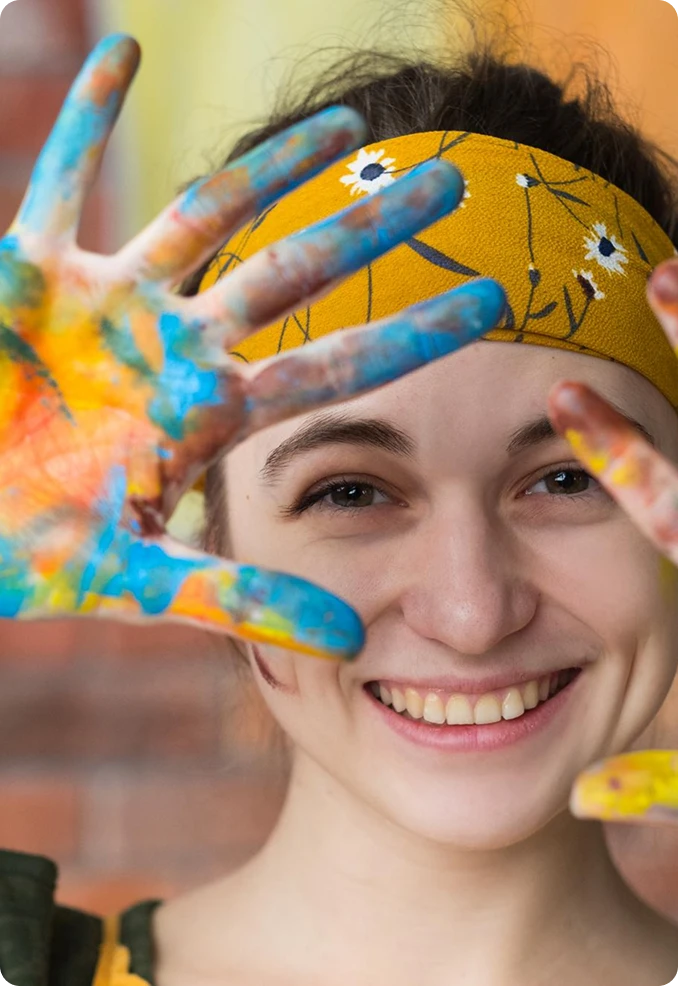
Art therapy isn’t a separate track here — it’s one more way into the same nervous-system-informed, relational work we do in every session.
Stress and difficult experiences aren’t always experienced through thoughts or words alone. Art therapy can offer another way to notice and explore sensations, emotions, images, and experiences as part of nervous-system-informed and somatic work.
Sometimes different parts of us carry different feelings, needs, fears, or ways of protecting us. Art-making can offer a way to explore these parts through images, colors, symbols, or materials—especially when they’re difficult to describe in words.
Sometimes we can understand something intellectually and still have difficulty connecting with how we experience it emotionally. Working with images and materials can offer another way to explore an experience without relying entirely on words.
Registered Art Therapists (ATR), with graduate-level training and supervised clinical experience in art therapy.
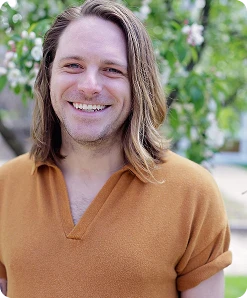
Trauma-informed therapist and interdisciplinary artist who believes healing happens through connection, collaboration, and reclaiming one’s sense of self.
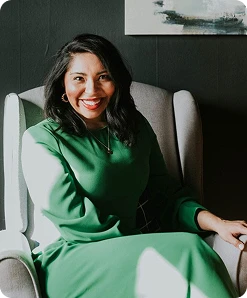
Licensed Clinical Professional Counselor and Registered Art Therapist currently working toward a Ph.D. in Art Therapy Psychology.
What “ATR” means: Registered Art Therapist — a national credential requiring a master’s degree in art therapy and supervised clinical hours specifically in art therapy practice.
Your therapist may offer a prompt, material, or starting point based on what you're exploring together. You can also choose to talk, make art, move between the two, or decide that art-making doesn't feel useful that day.
You might work with paper, drawing materials, collage, paint, clay, found objects, or other materials. Artistic skill isn't the goal—the focus is on your experience of the process and what feels meaningful to you.
You decide whether to talk about it, keep it, or leave it behind. Your therapist may invite curiosity or reflection, but you decide what your artwork means to you and how much you want to explore or talk about it.
You don’t need to have everything figured out before starting therapy.
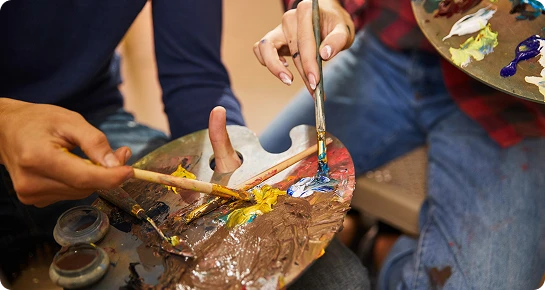
You don’t need to consider yourself artistic or creative to participate in art therapy. What you create isn’t evaluated based on artistic skill or how it looks. Sometimes the process of making art can be just as meaningful as what you create, offering space to notice thoughts, feelings, choices, or reactions that come up along the way.
You don’t need to consider yourself artistic or creative to participate in art therapy. What you create isn’t evaluated based on artistic skill or how it looks. Sometimes the process of making art can be just as meaningful as what you create, offering space to notice thoughts, feelings, choices, or reactions that come up along the way.
You don’t need to consider yourself artistic or creative to participate in art therapy. What you create isn’t evaluated based on artistic skill or how it looks. Sometimes the process of making art can be just as meaningful as what you create, offering space to notice thoughts, feelings, choices, or reactions that come up along the way.
You don’t need to consider yourself artistic or creative to participate in art therapy. What you create isn’t evaluated based on artistic skill or how it looks. Sometimes the process of making art can be just as meaningful as what you create, offering space to notice thoughts, feelings, choices, or reactions that come up along the way.
Curious about whether art therapy might be a good fit for you? A free 15-minute consultation with our intake coordinator gives you a chance to learn more, ask questions, and explore whether working with Corbly or Savannah feels right for what you’re looking for.